Tip 1: Avoid overcommitment on delivery dates. Build in buffers for unanticipated needs like equipment delays, software failures, or even weather.
Tip 2: Continuously assess people’s capabilities. Balance their strengths with support — for example, validate security threats with a third party before taking drastic measures.
Tip 3: Document SOPs, RACI accountability, and workflows. Refer back to the roadmap and refine regularly.
Tip 4: Invest in your people. Support education, certifications, and growth opportunities to build a resilient and high-performing team.
Tip 5: Align planning with flexibility. Maintain a roadmap that allows pivoting as new technologies or client needs arise.
In the dynamic world of Information Technology, resource optimization stands as a cornerstone of efficiency and innovation. Balancing the triad of infrastructure, people, and processes is crucial for IT organizations to thrive and to provide consistent value. Yet, how can IT leaders ensure that every resource is utilized to its full potential?
How do the principles of modern infrastructure align with human capital and streamlined processes to ensure that IT departments are agile, robust, and forward-thinking?
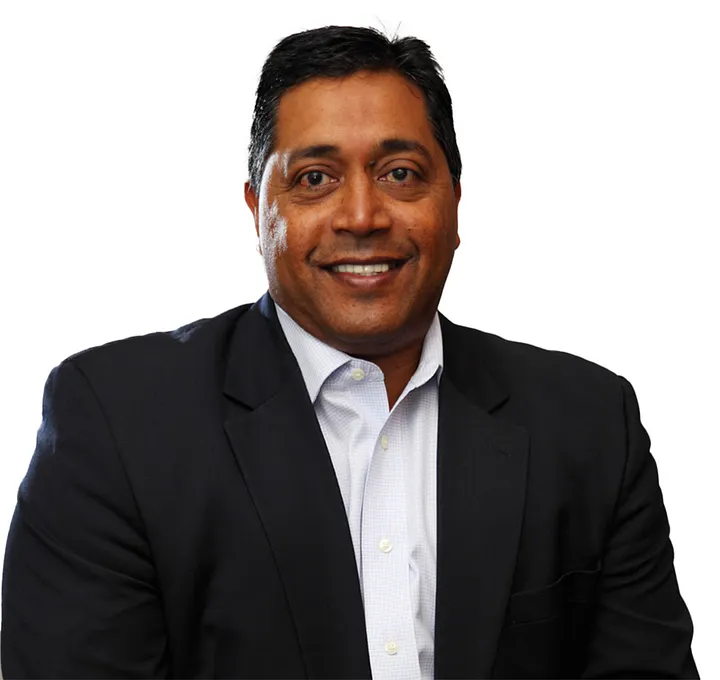
As a part of this series, we had the pleasure of interviewing Seelin Naidoo.
As Chief Executive Officer of Frontline Managed Services, Seelin Naidoo sets the strategic vision and leads the firm’s global operations, driving innovation and sustainable growth across its expanding legal and professional services client base. Since joining the company in 2004, he has transformed Frontline from a regional service provider into a global leader in outsourced administrative, financial, and IT solutions — supporting over 800 law firms with a team of more than 1,000 employees worldwide.
Thank you so much for doing this with us! Before we dive in, our readers would love to “get to know you” a bit better. Can you share your personal backstory with us?
Since 2004, I’ve been on a mission to make Frontline Managed Services the go-to operational partner for law firms. Today, we empower over 800 firms worldwide with IT, financial, and administrative solutions that actually make their work easier — and smarter. Leading a global team of more than 1,000 experts, I focus on blending technology, people, and operational insight to turn everyday law firm operations into a competitive advantage.
I’m especially proud of integrating Intelliteach, launching LPO centers in India and South Africa, expanding into Canada and the UK, and rolling out proprietary platforms like iRIS, SkillBuilder, and FMS HELIX-AI. Every milestone is about turning challenges into solutions and anticipating what law firms will need next.
Before Frontline, I scaled businesses and launched new service lines at Cash Management Solutions, Trustinus, and Kelly Services. Those experiences reinforced my belief that growth is about people, innovation, and measurable client value. Off the clock, you’ll find me golfing, boating with family, or enjoying our lake home in Michigan.
Let’s talk about how to optimize IT Resources. How do you assess the current state of your IT infrastructure? What metrics do you use to measure its efficiency?
I start with a strategic roadmap that defines the cross-functional outcomes we want to achieve and aligns them with budget, forecasting, and resource allocations. We evaluate these outcomes every quarter based on sales, resources, and other business requirements. My key metrics include timelines, budgets, change orders, and sales forecasts, which give me insight into whether our technology infrastructure is performing as intended and delivering value to our clients.
How do you prioritize and allocate resources for hardware and software upgrades to maximize performance?
I rely on analysis and recommendations from our 24/7 NOC (Network Operations Center), where engineers and other professionals constantly review our systems. We perform monthly compliance checks on internal and external hardware and software, and maintain a proactive approach to updates to ensure stability.
When updates don’t meet our standards, we prioritize upgrades. Our channel partners also help identify which systems take precedence based on interdependencies, using best-in-class vulnerability management systems to guide our decisions.
What security measures do you have in place to safeguard your IT infrastructure while optimizing its performance?
We are ISO-certified and maintain annual recertification across all business units, so we comply with global security standards. We also run a Vulnerability Management Program (VMP) as part of our ISO requirements. This combination of certification and ongoing testing helps us protect our infrastructure while ensuring performance and uptime for our clients.
How do you identify the skill sets and competencies required for your IT team to effectively manage and optimize resources?
I identify required competencies through ongoing evaluation — reviewing skill sets, experience, and leadership qualities. We then build teams based on the right synergies to achieve the most successful outcomes.
I also invest in automation and AI to help our teams work smarter and more efficiently, often generating cost savings for clients. Our HR team brings in top talent from around the world and supports them with educational benefits, certification tracks, upskilling, performance management, and conference opportunities.
What strategies do you use to foster professional development and continuous learning within your IT team?
We invest heavily in professional development because it benefits both the organization and our clients. I make sure my team stays on top of trends and updates through conferences, learning webinars, and programs like cybersecurity symposiums. We also fund certifications and conference attendance with partners like Cisco, Microsoft, and AWS to ensure our teams have access to enablement programs and cutting-edge learning opportunities.
Can you share examples of how cross-functional collaboration has contributed to resource optimization in your IT department?
I rely on the team to contribute to collaboration and tactical execution of the technology roadmap. If leadership does its job right, we can match up skills and expectations with roadmap deliverables. My most important focus is ensuring security and development processes are in place. When threats or roadblocks arise, we take appropriate measures quickly, leveraging our cross-functional teams to resolve issues efficiently.
How do you identify bottlenecks or inefficiencies in your IT processes that might hinder resource optimization?
I use the technology roadmap as my number one tool to identify optimization gaps and areas that are off track. Everyone on the team is accountable for their actions with full transparency. If one area is lacking, we can adjust immediately to remove bottlenecks and ensure seamless operations.
How do you ensure that your IT processes are aligned with business objectives and contribute to overall organizational efficiency?
I make sure the IT plan is reviewed and endorsed by the entire team and adjusted when needed. A perfect example is our FMS HELIX-AI rollout plan. Over more than a year, we tracked every development milestone and platform completion against the roadmap, providing an accountability path for the team and ensuring our IT processes supported our organizational goals.
Can you share experiences where you’ve successfully automated routine tasks to free up resources for higher-value activities?
The launch of FMS HELIX-AI allowed us to automate help-desk workflows and reduce escalations significantly. Once my team understood their roles and responsibilities, I was able to step back and focus on higher-level initiatives until it was time for review. Automation gave us the ability to free up senior leadership bandwidth while improving service delivery and client outcomes.
Fantastic. Here is the primary question of our interview. What are your 5 Tips to Optimize IT Resources Through Infrastructure, People, and Processes?
Tip 1: Avoid overcommitment on delivery dates. Build in buffers for unanticipated needs like equipment delays, software failures, or even weather.
Tip 2: Continuously assess people’s capabilities. Balance their strengths with support — for example, validate security threats with a third party before taking drastic measures.
Tip 3: Document SOPs, RACI accountability, and workflows. Refer back to the roadmap and refine regularly.
Tip 4: Invest in your people. Support education, certifications, and growth opportunities to build a resilient and high-performing team.
Tip 5: Align planning with flexibility. Maintain a roadmap that allows pivoting as new technologies or client needs arise.
How do you maintain a balance between short-term resource optimization goals and long-term strategic IT planning?
Carefully. Everything comes back to the technology roadmap and resource allocation. Long-term planning focuses on sustainable, scalable staffing and operations, while short-term goals are addressed without creating bottlenecks. I also ensure there are no single points of failure, and that critical risks are actively mitigated.
What role does feedback from end-users and stakeholders play in shaping your resource optimization strategies?
Feedback is critical. We use it to understand client expectations, measure if service needs are being met, and determine the investment required. This process is continuous — not just at the end of a project — and includes feedback on usability, benefits, and overall client experience. It ensures that our solutions are practical and deliver tangible value.
How do you adapt your resource optimization strategies to accommodate technological advancements and industry trends?
I continuously revisit the roadmap and evaluate new platforms and technology trends. The goal is to integrate solutions that make sense for the long-term business strategy. By staying proactive rather than reactive, we ensure Frontline and our clients stay ahead of industry change.
We are very blessed that some very prominent names in Business, VC funding, Sports, and Entertainment read this column. Is there a person in the world or in the US with whom you would love to have a private breakfast or lunch, and why?
Sadly, most of the people I admire most aren’t with us anymore. However, I really admired Nelson Mandela for his leadership qualities, empathy, and compassion, even while enduring unimaginable hardships. He always kept the bigger picture in mind for the greater good. That type of leadership — vision combined with humanity — is the kind of conversation I would value immensely.
Thank you so much for sharing these important insights. We wish you continued success and good health!